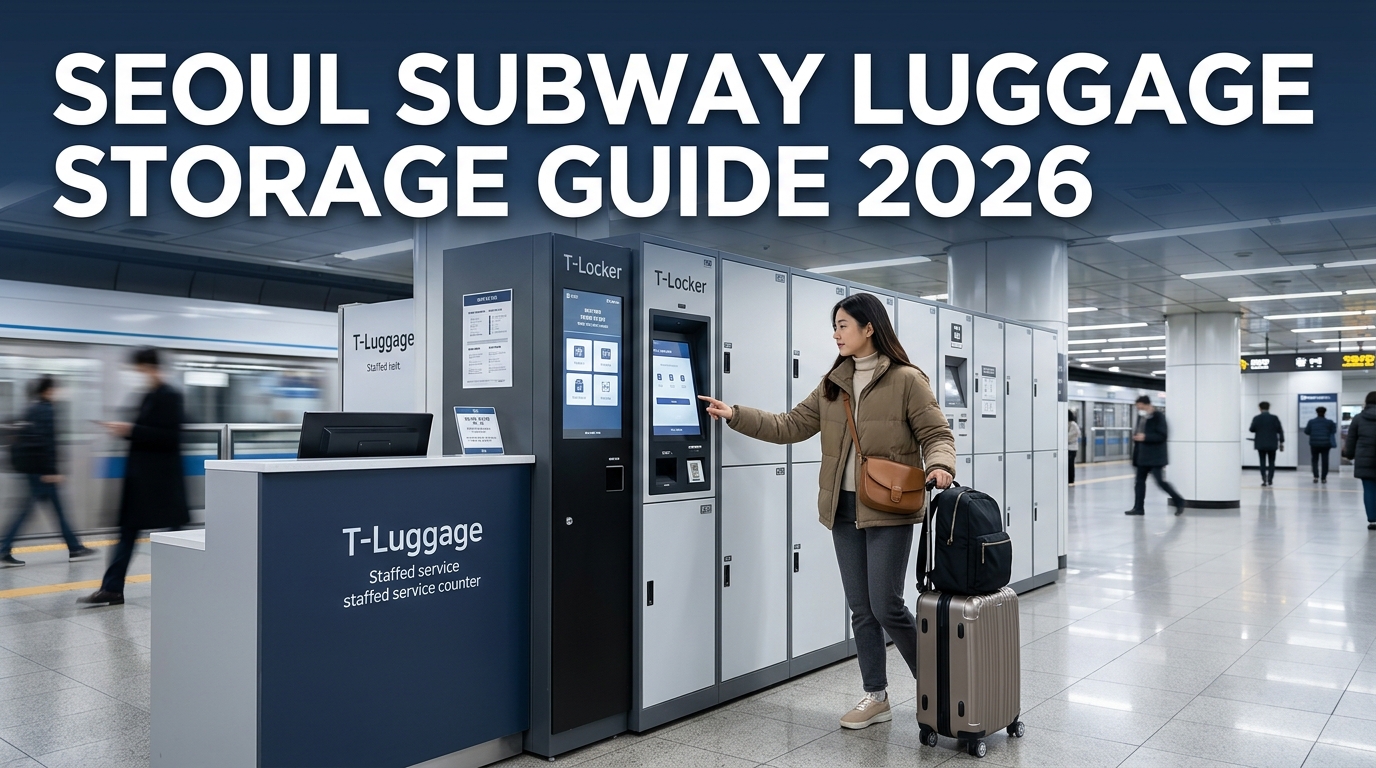
Researched in Korea — We check Korean-language local sources and direct official information, then explain the practical details in clear English.
A good storage plan starts with your return route, not with the first empty locker you see. Choose a station that you will naturally pass again before checking in, boarding a train, or heading to the airport. That small decision can prevent an unnecessary cross-city trip at the end of a long day. If your plans include outdoor walking during Korea’s summer rain season, review our practical monsoon travel guide before deciding how long to leave your bags.
The 'Drop & Roam' Strategy: Why Subway Storage is a Travel Hack
When this strategy saves the most time
Subway luggage storage is most useful on transition days: after an early arrival, before a late departure, or when a hotel cannot hold bags at a convenient time. Write down three points before choosing a locker: where you enter the rail network, where you will spend the day, and where you must be afterward. The best storage station is normally the one that fits that sequence with the least backtracking, even when another station appears closer on a map.
Treat the locker as part of your itinerary. Estimate when you will return, then add a comfortable buffer for finding the correct concourse and retrieving the bag. Seoul stations can have multiple exits and long internal passages, so a rushed pickup can erase the time you saved earlier. If the day’s route remains uncertain, choose a major transfer point that you expect to pass again rather than a one-purpose stop far from your final connection.
Dragging heavy suitcases through crowded subway platforms is the quickest way to exhaust yourself. Seoul’s transit infrastructure is designed to facilitate mobility, and utilizing designated luggage storage turns your transit hub into a temporary basecamp. By leaving your bags behind, you reclaim your mobility to explore neighborhoods like Myeong-dong or Hongdae without the logistical burden of heavy luggage.
T-Locker vs. T-Luggage Comparison
Choose the service by the problem you need to solve
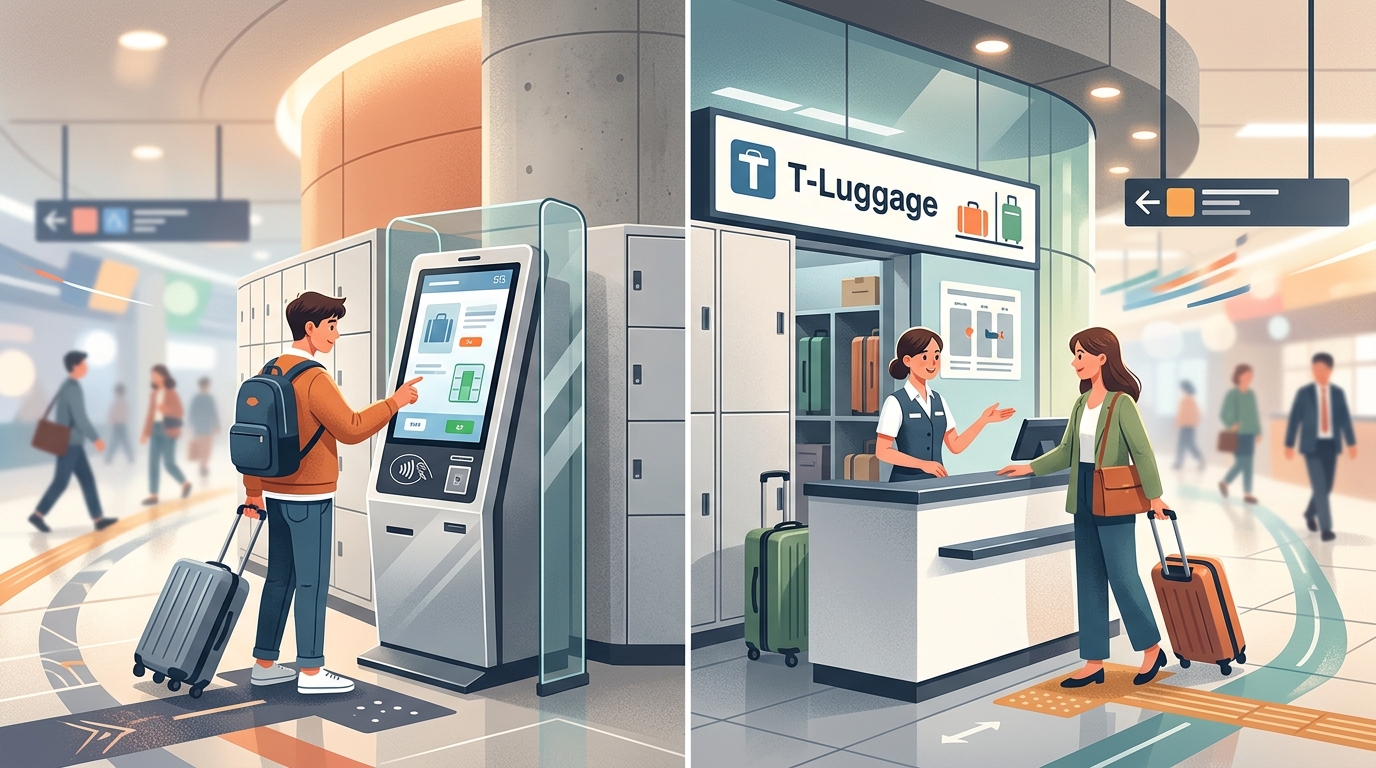
A self-service locker suits travelers who have a bag that clearly fits, understand the payment and retrieval instructions, and want flexibility without speaking to staff. A staffed service is the safer choice when the luggage is unusually large, several bags must stay together, or you want help confirming the collection procedure. Neither option is automatically better; the right choice depends on bag size, the support you need, and how strictly your pickup time is fixed.
Before committing, confirm four things on the official screen, app, or service notice: the exact location, the available size, the fee and overtime rule, and the retrieval deadline. Do not assume that two stations use identical equipment or rules. If a key detail is unclear, use a staffed counter or another verified location rather than guessing with a bag already inside the system.
| Feature | T-Locker | T-Luggage |
|---|---|---|
| Service Type | Automated/Self-Service | Staffed/Concierge |
| Best For | Quick, short-term storage | Oversized bags & airport delivery |
| Availability | 270+ Stations | Major Transit Hubs (e.g., Seoul Stn) |
Where to Find Them: Locating Lockers in Seoul Subway Stations
Make the station layout part of your route
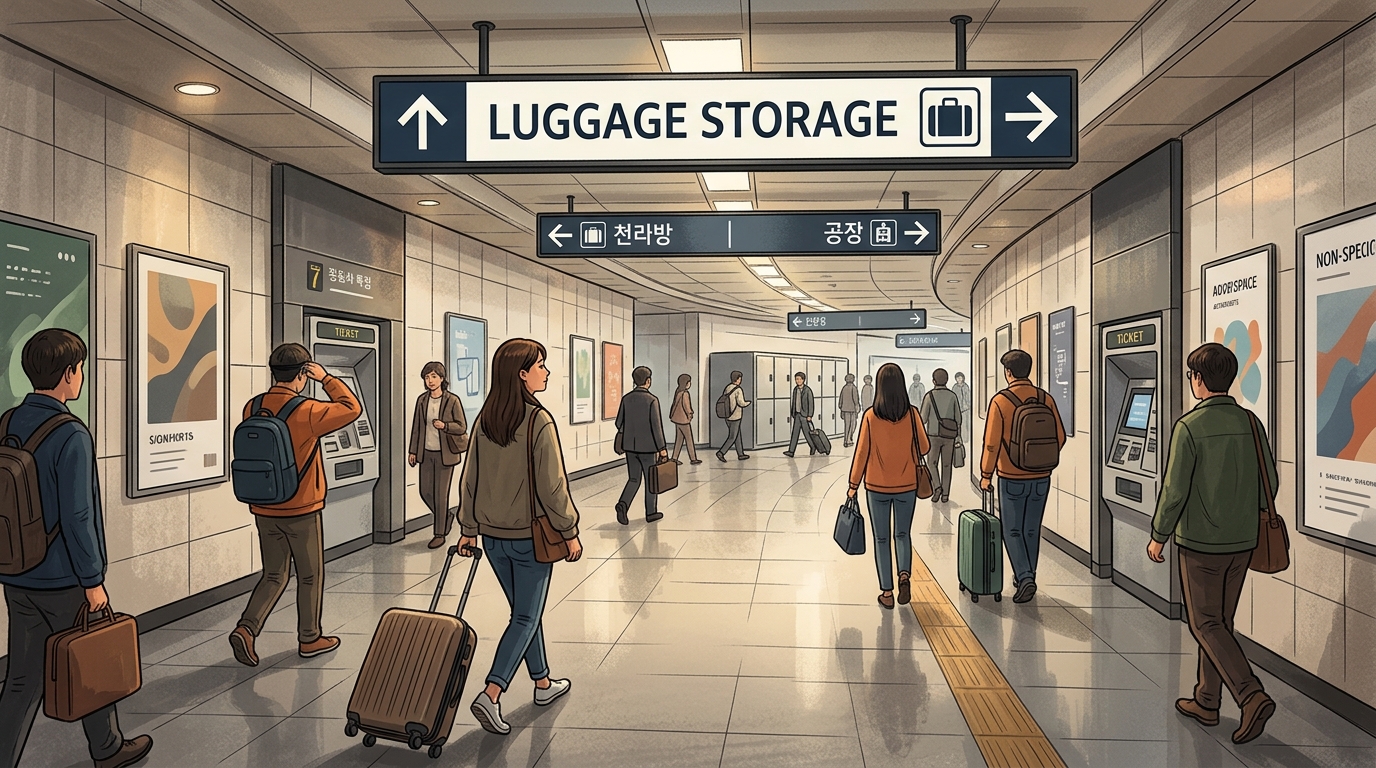
Knowing the station name is not enough. A locker may be outside the paid area, near a specific exit, or on a concourse that is inconvenient from the platform you use. When you find the storage point, note the exit number, floor, nearby sign, and whether you crossed a ticket gate. Save a photo or short note on your phone so you can return directly without repeating the search.
Availability can change during the day, especially at useful transfer locations. Build one backup into the same travel corridor before you arrive. A good backup is not simply the nearest station; it is a station that still works with your next destination and final departure route. This keeps a full locker bank from forcing a complete rewrite of the day.
Locker banks are typically located near the ticket gates or in the concourse level of major subway stations. While almost all major stations have T-Locker facilities, the availability of T-Luggage is limited to high-traffic hubs such as Seoul Station. Always look for signage in English that says "Luggage Storage" or "Locker." You can verify real-time station amenities via the official Seoul Metro website.
How to Use T-Locker: Step-by-Step for Foreign Travelers
Complete a final check before you walk away
Read the confirmation screen slowly and verify that it refers to the station and locker you are standing beside. Save the locker number, transaction reference, access method, and any retrieval deadline in more than one place—for example, in the app and as a screenshot. If the system provides a receipt, keep it until the bag is back in your hands.
After closing the door, check that it is actually locked and that nothing is trapped around the edge. Set a phone reminder well before your intended pickup time. The reminder should account for subway travel, transfers, walking inside the station, and a small problem-solving buffer. This is especially important when the next step is a reserved train, airport transfer, or hotel check-in with a fixed closing time.
The T-Locker app simplifies the process for international visitors. Before you arrive, it is helpful to have your logistics planned; you can read more about essential tools in our guide to Navigating Korea: 5 Must-Have Apps for Your 2026 Trip.
- Download & Register: Use the official T-Locker app.
- Select Station: Choose your current subway station on the digital map.
- Select Locker Size: Choose between small, medium, large, or extra-large to fit your bag.
- Payment: Use a registered credit card or, in some cases, your T-money card balance as detailed on the official T-money website.
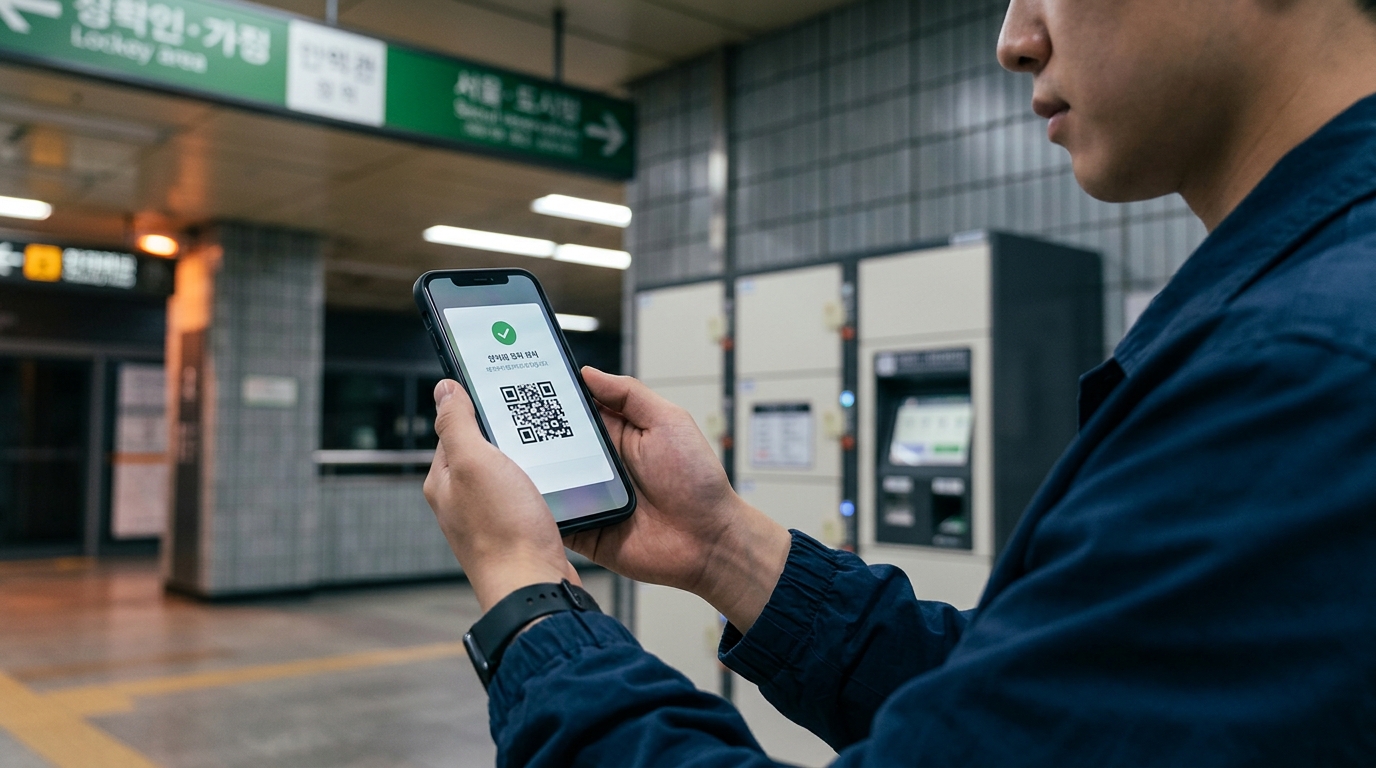
- Secure: Follow the on-screen instructions to lock your bay and receive your access code or QR scan data.
Budgeting and Payments
Compare the total journey cost, not only the posted fee
The lowest storage price is not always the cheapest decision. A locker that requires an extra round trip can add transit fares, walking, and lost sightseeing time. Compare the posted storage terms with the practical cost of returning to that station. When two locations appear similar, favor the one already on your departure path.
Before payment, read the current base period, overtime calculation, and overnight rule shown by the service. Do not rely on an old blog screenshot or a remembered price because equipment and policies can change. Note the start time and set an alert before the next charging period when the displayed terms make that useful. If the likely pickup time is uncertain, budget for the longer stay instead of planning around the minimum fee.
Storage fees are generally structured based on a base-time period, often a 4-hour window, followed by additional charges for exceeding that time. It is significantly cheaper to use these public facilities than private luggage storage shops. Remember that overnight storage usually incurs a higher cumulative fee, so plan your pickup time carefully.
Common Mistakes to Avoid
Plan retrieval as carefully as a train connection
The most common planning error is focusing on drop-off and treating pickup as automatic. Before leaving, open your map and confirm the route back to the same station. Check which entrance remains convenient from your evening location and whether your planned return leaves enough time for wayfinding. Keep passports, essential medicine, tickets, irreplaceable electronics, and anything needed before pickup with you rather than inside stored luggage.
If your phone controls access, protect the retrieval information from a dead battery or lost connection. Carry a charged power bank and save the essential reference offline when the service permits it. When sharing one locker with another traveler, make sure both people know the station, location, and pickup plan. A clear shared note prevents one person from leaving the area with the only access information.
Avoid leaving valuables like passports or cash in lockers; while the system is secure, common travel sense applies. Also, verify that the locker is fully latched before walking away, as some automated systems require a firm push to engage the locking mechanism.
Final Travel Checklist
A 60-second check before leaving the locker area
- Confirm the station name, exit or concourse, locker number, and retrieval method.
- Save the transaction or access reference offline and keep any receipt.
- Set a pickup reminder that includes subway travel and walking time.
- Keep essential documents, medicine, tickets, and valuables with you.
- Tell companions exactly where the bag is stored and who will retrieve it.
- Check your station of arrival for "Locker" signage on the metro map.
- Ensure your phone is charged to access the T-Locker app for retrieval.
- Keep your locker access code or QR code screenshot saved in your photos.
- Carry a backup payment method if your T-money balance is low.
Frequently Asked Questions
Can I use subway lockers if I don't have a Korean phone number?
Yes, the modern T-Locker app systems are designed to support international travelers. Ensure your app is updated to the latest 2026 version for seamless registration.
How do I pay if I only have a credit card?
Most digital T-Locker systems accept international credit cards via the app payment gateway. For staffed T-Luggage centers, credit cards are standard practice.
Are there size limits for T-Locker lockers?
Lockers are categorized by size. Always choose the size that accommodates your bag with a little room to spare. If your bag is exceptionally large, prioritize finding a T-Luggage staffed center.
Can I leave my luggage overnight?
Yes, but be aware that extra fees apply for every 24-hour cycle. Check the app for the specific overtime policy before locking your items.


No comments:
Post a Comment